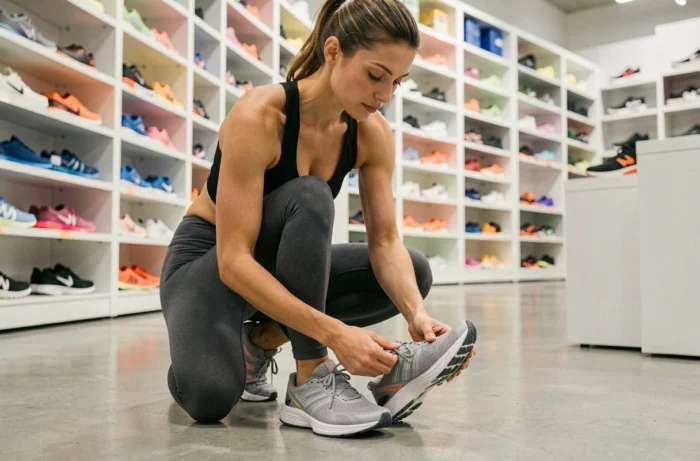
A sports equipment is defined by its ability to support a technical gesture without constraining it. Shoes, clothing, protective accessories, or measuring instruments: each element serves a specific function that directly influences comfort, safety, and progress. Choosing sports equipment means identifying the mechanical constraints of one’s discipline and then selecting the gear that best meets those needs.
Biomechanics of the foot and choice of sports shoes
The foot is the first point of contact with the ground in most disciplines. Its morphology determines the distribution of impact forces, and therefore the type of shoes to prioritize.
Three parameters determine the compatibility between a foot and a shoe: the type of stride (pronated, supinated, or neutral), the width of the forefoot, and the height of the arch. A pronated runner using a neutral shoe exposes themselves to asymmetric stress on the knee. Conversely, excessive correction of pronation on a neutral foot disrupts the muscular chain.
Cushioning plays a distinct role depending on training frequency. For regular practice (three sessions or more per week), a dense midsole absorbs repeated shocks better than a soft foam, which loses its properties more quickly. To explore the equipment at Sport et Form allows for comparing the technical characteristics of shoes suitable for different types of practitioners.
The weight of the shoe is often overvalued as a selection criterion. A lightweight shoe does not compensate for poor lateral support, especially in sports involving direction changes (tennis, badminton, team sports).
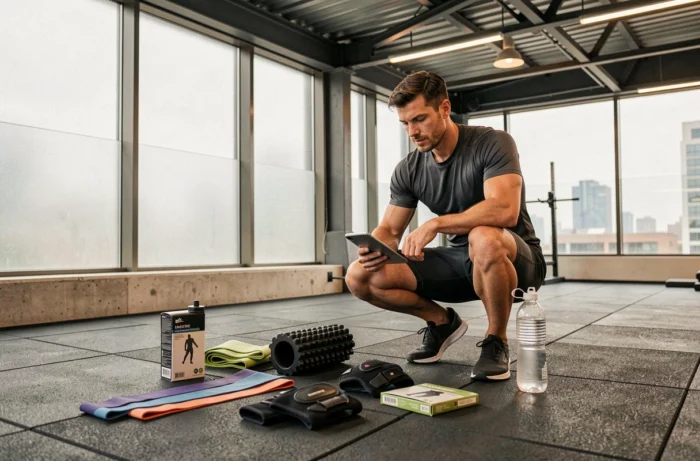
Technical textiles: understanding the properties of sports fibers
A sports garment is not just a comfortable fabric. Its composition determines its ability to wick away sweat, regulate body temperature, and resist abrasion.
Synthetic fibers like polyester and polyamide dominate the sports textile market for a technical reason: they are hydrophobic. Sweat migrates to the surface of the fabric by capillarity, where it evaporates. Cotton, on the other hand, absorbs moisture and retains it, which weighs down the garment and promotes skin irritations.
In recent years, environmental criteria have influenced the design of sports textiles. The rise of recycled fibers and sustainability certifications (such as the OEKO-TEX label or ISO standards related to sports articles) is gradually changing the available offerings. A well-designed recycled textile offers comparable performance to its conventional counterpart.
- Recycled polyester: quick moisture wicking, fast drying, good abrasion resistance. Suitable for endurance sports.
- Elastane (or Lycra): provides the necessary stretch for wide movements (yoga, gymnastics, climbing). Generally represents a small proportion of the blend.
- Merino: natural thermoregulating fiber, effective against odors. Preferred for outdoor activities in variable conditions.
- Polyamide: more tear-resistant than polyester, often used in reinforcement areas (knees, elbows).
The weight of the fabric is as important as its composition. An excessively light weight does not protect against prolonged friction, while a fabric that is too dense limits breathability. The choice depends on the intensity and duration of the effort.
Protective equipment: standards and fit
Helmets, knee pads, shin guards, sports glasses: protective equipment is subject to technical standards that guarantee a minimum level of shock absorption. Using a football shin guard for field hockey, for example, ignores the differences in angle and impact speed between the two disciplines.
A poorly fitted piece of protective equipment loses most of its effectiveness. An oversized bicycle helmet rotates during an impact and no longer absorbs energy appropriately. A knee brace that is too tight compresses the joint and limits the range of motion, which can paradoxically increase the risk of injury.
Periodic replacement is part of the initial choice. A helmet that has sustained an impact, even without visible damage, must be replaced: the internal structure made of expanded polystyrene deforms irreversibly during the first shock.

Sensors and connected watches: measuring to progress
Connected watches and bracelets measure heart rate, running cadence, power output, and sleep quality. This data allows for adjusting session intensity and spotting signs of overtraining.
A recent study published in the field of mobile health indicates that perceived usefulness and ease of use are the two main factors for adoption of these devices. A sensor that is too complex to set up ends up in a drawer, regardless of the number of metrics offered. Moreover, the reliability of wrist heart rate measurement remains lower than that of a chest strap, especially during intermittent efforts.
Adapting sports equipment to practice frequency
The necessary level of equipment directly depends on the regularity of practice. A beginner who runs once a week does not need the same cushioning as a runner who accumulates several dozen kilometers weekly.
- Occasional practice (once or twice a month): an entry-level equipment is sufficient, provided it is suitable for the discipline and properly fitted.
- Regular practice (two to four times a week): mid-range offers the best compromise between durability and technicality. The materials withstand frequent washing and repeated stresses better.
- Intensive practice or competition: high-end is justified by measurable gains in terms of weight, responsiveness, or protection. Every gram and every millimeter counts.
The effect of the Paris 2024 Olympic Games has led to a lasting increase in participation in certain disciplines, particularly combat sports and outdoor activities. This influx of new practitioners makes the choice of the right level of equipment even more relevant: investing in gear suited to one’s actual level avoids both unnecessary expenditure and injuries related to unsuitable equipment.
The last criterion not to be overlooked is maintenance. Well-maintained sports equipment retains its technical properties longer. Washing textiles at low temperatures, storing shoes away from moisture, regularly checking the condition of protective gear: these simple actions extend the lifespan of the equipment and maintain its original performance level.