
One often comes across Audistim when searching for a quick solution to persistent tinnitus or established auditory discomfort. The product is presented as a dietary supplement made from ginkgo biloba, magnesium, and B vitamins, sold without a prescription. The stated promise, “promote good hearing,” naturally raises the question of what one really risks by taking these tablets over time.
Ginkgo biloba and bleeding risk: what the product sheet doesn’t detail
Ginkgo biloba is the star ingredient of Audistim. It is presented as a support for peripheral blood microcirculation, including in the inner ear. On paper, the idea seems logical.
The concrete problem arises when one is already taking an anticoagulant or an antiplatelet agent. Ginkgo can increase the risk of bleeding when interacting with these treatments. Recent pharmacological sources are clear on this point: medical advice is deemed necessary before any supplementation.
For someone consulting a cardiologist, undergoing post-stroke treatment, or simply taking aspirin daily, adding a supplement containing ginkgo without discussing it with their doctor poses a real risk. This is not a theoretical scenario; it is a common situation among people over 60, precisely the age group most affected by auditory disorders.
Several users are questioning the danger associated with Audistim when combined with other treatments, and this question deserves serious consideration before starting a regimen.
Tinnitus and dietary supplements: the gap between promise and clinical evidence
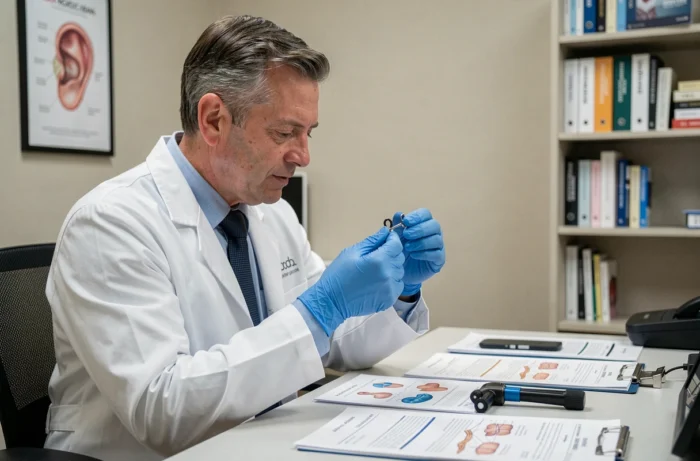
It is regularly stated that certain dietary supplements “reduce tinnitus.” Audistim plays on this ground by highlighting its Day/Night program, with tablets for blood circulation during the day and capsules for sleep at night.
No dietary supplement has demonstrated the ability to eliminate established tinnitus. Cochrane reviews, which synthesize all available studies, have not found convincing benefits of ginkgo biloba when tinnitus is the primary symptom. Existing studies are heterogeneous, often of limited quality, and do not allow for recommending this molecule to treat ear ringing.
This observation does not mean that the product is entirely useless. Feedback varies on this point: some users report better subjective comfort, a reduction in perceived discomfort. The nuance lies between “support for comfort” and “treatment.”
Zinc, magnesium, B vitamins: useful nutrients, not medications
Audistim contains magnesium, vitamins B1, B3, B6, and B12, and some formulas include zinc. These micronutrients play a recognized role in the functioning of the nervous system and in reducing fatigue.
- Magnesium helps reduce fatigue and contributes to the normal functioning of the nervous system, but its direct effect on hearing remains unproven by solid clinical trials.
- Zinc has been studied in the context of tinnitus without convincing results that would recommend it specifically for this symptom.
- B vitamins support psychological functions (memory, concentration), which can indirectly help a person fatigued by their tinnitus, without acting on the cause.
These nutrients compensate for a potential deficiency; they do not repair an auditory lesion. One should not expect to regain lost hearing through supplementation.
Side effects of Audistim: signals to watch for in practice
On parapharmacy sheets, precautions for use are often minimized: not recommended for pregnant women, do not exceed the daily dose. In practice, the points of vigilance go further.
- Digestive disorders (nausea, abdominal pain) are a reported effect associated with ginkgo biloba, especially at the beginning of the regimen.
- Dizziness or headaches may occur, which is paradoxical for a product intended to improve daily comfort.
- The risk of drug interaction is not limited to anticoagulants: some antidepressants and antiepileptics can also interact with ginkgo.
- Prolonged use without medical supervision prevents the detection of an underlying pathology that would require appropriate treatment (acoustic neuroma, Ménière’s disease, hypertension).
Taking a dietary supplement for auditory symptoms without prior ENT consultation amounts to treating an alarm signal without seeking the cause. This is the main trap of prolonged self-medication with this type of product.

When to consult a doctor instead of prolonging the Audistim regimen
A tinnitus lasting more than a few weeks, recurrent dizziness, even slight hearing loss: these symptoms justify an ENT consultation, not a third box of supplements. Recent recommendations from the HAS on the management of tinnitus emphasize a structured care pathway.
The temptation is strong to stick with an over-the-counter product that gives the impression of working. One postpones the doctor’s appointment, adjusts the dose oneself, adds an additional supplement. This behavior delays the diagnosis of a treatable cause.
Audistim is not a dangerous product in itself for a healthy person who respects the doses and precautions. The real risk lies in its use: combining it with existing treatments without medical advice, substituting it for a diagnosis, or prolonging it indefinitely without reevaluation. A dietary supplement remains a supplement, not a first-line treatment for persistent auditory disorders.