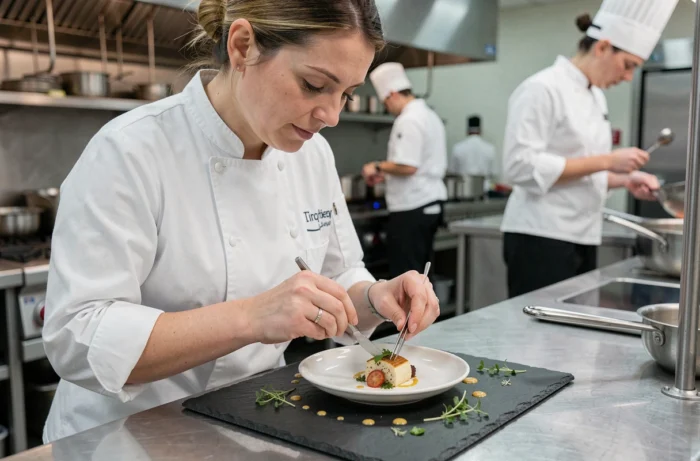
A chef who reformulates his menu because the price of zucchinis has risen significantly over the past few years, a restaurateur who replaces butter with a homemade fermented condiment to maintain his margins: culinary trends do not arise in a vacuum. They respond to concrete constraints, and following them in real-time requires understanding what drives them.
Inflation on fresh products and reconfiguration of restaurant menus
In France, the prices of fresh products are driving food inflation upwards, with monthly increases significantly higher than those of food excluding fresh products, according to Insee. This cost pressure reshapes restaurant menus much more reliably than aesthetic trends.
Vegetables like zucchinis, tomatoes, and green beans have shown marked increases for several years. Fruits and vegetables are the category with the fastest rising prices.
For chefs, this means making trade-offs. We see shorter menus emerging, with dishes built around hardy vegetables (squash, beets, cabbage) rather than fragile and expensive products. This is not an aesthetic choice; it is margin management. When regularly consulting the news on 75cl info, one can also gauge how the beverage world is facing the same type of pressure on supplies.
Heatwaves and repeated droughts exacerbate the phenomenon. Salads, endives, and some leafy vegetables are becoming products with variable availability, pushing restaurants to work in a just-in-time manner with their farmers.
Fermented condiments and sourdough: techniques moving out of the niche
Sourdough is no longer just used for making bread. Chefs are now using it as a base for sauces, marinades, or desserts. This extension of sourdough beyond the bakery serves a dual purpose: reducing dependence on expensive dairy products and adding complexity without multiplying ingredients.
Homemade fermented condiments (local grain misos, mushroom garum, fruit vinegars) are taking up an increasing space on menus. Their concrete advantage for a restaurateur:
- A low production cost, as they utilize trimmings, peels, or surplus that would otherwise end up in the trash
- A long shelf life, which stabilizes stock and limits losses
- A differentiation marker on the menu, at a time when consumers are seeking flavors they cannot replicate at home
Feedback on this point varies by establishment: a neighborhood bistro does not have the same latitude as a fine dining restaurant to offer a fava bean miso to customers. Adoption remains gradual, but the direction is clear.
Real-time culinary monitoring: where to find reliable information
Keeping up with culinary trends is not just about scrolling through social media. The most useful sources combine economic data and food creativity. A trendy dish that ignores the reality of prices has no chance of lasting on a menu.
The channels that allow for structured monitoring include:
- Specialized sections of culinary media (Michelin Guide, Madame Figaro Cuisine, Le Monde passe à table), which document chef movements and restaurant openings
- Economic publications from Insee and agricultural observatories, which shed light on price and supply constraints affecting menus
- Professional platforms and trade shows (Sirha, Omnivore), where dish ideas and recipes are tested before reaching the consumer’s plate
- Chefs’ and artisans’ accounts on social media, provided you filter out the noise: a chef showcasing their daily work in the kitchen offers more than a food influencer staging plates
The challenge is the volume. One can spend hours scrolling without retaining much. The best monitoring combines an economic source, a creative source, and field feedback (conversation with a producer, market visit, meal at a recently opened restaurant).

Consumption of dairy products and proteins: what is changing in French meals
Trends are not only seen in starred restaurants. Domestic habits are also shifting. French households are buying less butter but more cheese, according to data from the dairy sector. This shift modifies everyday recipes and consumer expectations when dining out.
On the protein side, pork consumption continues to rise in 2026, while plant-based options are gaining ground in fast food and quick-service menus. The focus is shifting towards hybrid meals, combining a small portion of meat or fish with a generous plant-based base.
For an amateur cook who wants to stay current, this translates into concrete choices: investing in a good vinegar rather than premium butter, learning to work with legumes in texture (hummus, purees, patties), and accepting that the main dish does not necessarily need to center around an animal protein.
The culinary trends of 2026 ultimately tell the same story from different angles: a cuisine that adapts to real constraints (price, climate, availability) rather than ignoring them. Following these movements in real-time means correlating what happens on the plate with what occurs in markets and on farms.