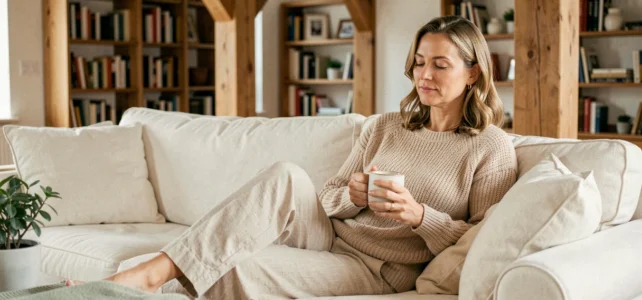
The interior decoration market has been shifting for several years towards approaches that go beyond simple aesthetics. Materials, lighting, indoor air quality: these parameters, long relegated to the background, directly influence the comfort felt in a home. Transforming your house into a cocoon of well-being requires understanding what truly affects the perception of a space.
Indoor air quality: the invisible factor of well-being at home
Before discussing colors or textiles, one parameter deserves special attention: the air you breathe at home. New coatings, adhesives, paints, and furniture release volatile organic compounds (VOCs) that compromise comfort and health in the long term.
Related reading : Essential Tips for Supporting Your Child's Development and Well-Being
In France, the reference value for formaldehyde changed on January 1, 2023, strengthening prevention thresholds. The current logic is based on two pillars: the choice of low-emission materials and effective ventilation. Environmental labels (such as A+ rating) help guide purchases, but they do not eliminate the need for regular airing out.
At the European level, the revision of the Construction Products Regulation by the regulation (EU) 2024/3110 pushes for a more harmonized information system on hazardous substances present in construction materials. This regulatory angle is rarely addressed in decoration guides, even though it directly conditions the air quality of your interior.
See also : Key Steps to Successfully Change Your Gas Boiler at Home
The ideas and resources shared on the home on the La Règle du Je website allow for exploring these topics from a practical perspective, from material selection to the overall layout of rooms.
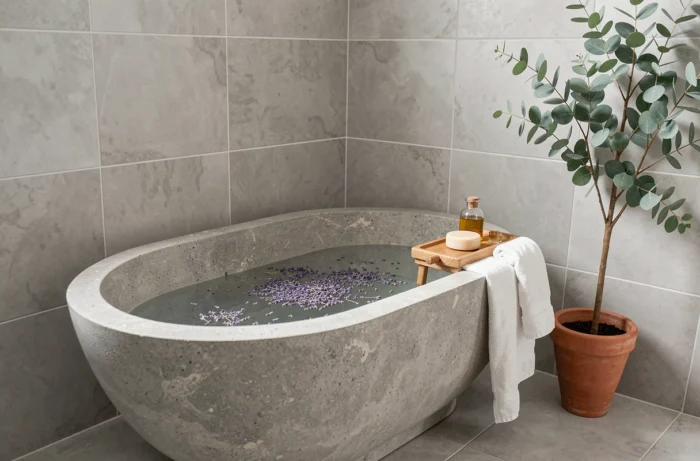
Biophilic design: beyond green plants for a calming atmosphere
The term “biophilic” is widely circulated, but its concrete application goes far beyond simply placing a ficus in a corner. In 2025-2026, this approach encompasses natural materials, natural light, and organic shapes throughout the decoration.
Raw wood, stone, linen, terracotta: these materials create a sensory connection with the outside. Earthy palettes (ochres, deep beiges, muted greens) help reduce mental load by providing a visually coherent environment without excessive stimulation.
What biophilic design changes in a living space
The goal is not to recreate an indoor garden. It is about integrating textures and shades that evoke natural environments, even subtly. A lime plaster wall, solid wood flooring, or a textile made from plant fibers changes the ambiance of a room more sustainably than a decorative object placed on a shelf.
Field feedback varies on the measurable impact of these choices on stress or sleep. The available data does not allow for a conclusion on a universally quantifiable effect. However, the coherence of materials and colors in a living space contributes to a sense of calm that most occupants perceive.
Home lighting and well-being: color temperature and ambiance zones
Lighting is probably the most underestimated lever for transforming the atmosphere of an interior. In recent years, specialized sources have emphasized the distinction between relaxation zones and activity zones, with color temperatures suited to each use.
- In relaxation spaces (bedroom, reading nook, living room), favoring warm lights promotes melatonin production in the evening and supports the transition to rest.
- In activity spaces (kitchen, office, entrance), a more neutral light supports concentration without straining the eyes.
- Variable-intensity fixtures allow for adjusting the ambiance according to the time of day, a principle directly related to the circadian rhythm.
A single ceiling light in the center of a room produces uniform lighting that flattens volumes and creates a cold atmosphere. Multiplying light sources at different heights (floor lamp, wall sconce, low-voltage garland) adds depth to the space and allows for modulation of intensity according to activities.
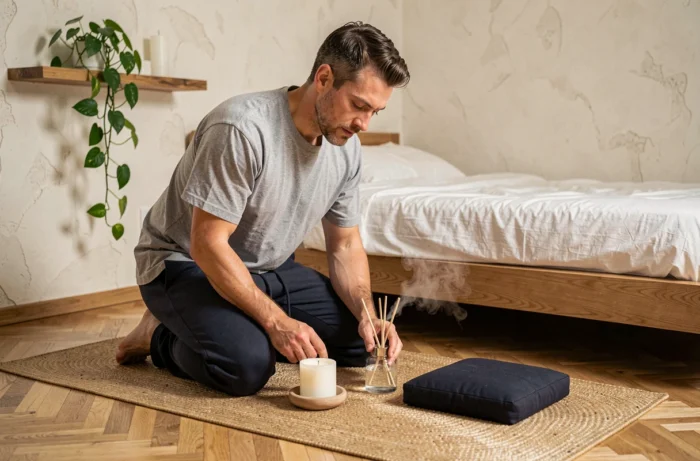
A common mistake in cozy rooms
Many guides recommend candles as an ambiance solution. Their aesthetic role is real, but scented candles release VOCs and fine particles. If indoor air quality is a priority, it is better to reserve their use for brief occasions and rely on electric lighting solutions with a warm spectrum.
Textiles and the layout of a cozy space: what really works
The tactile dimension of an interior plays a direct role in the perception of comfort. A rough fabric sofa or a cold floor underfoot is enough to make a room unwelcoming, even if well-decorated.
- Wool or thick cotton rugs absorb sound and visually warm up a space, especially on a hard floor (tiles, polished concrete).
- Cushions and throws made from natural materials (washed linen, merino wool) provide a layering of textures that enhances the cocooning effect.
- Heavy fabric curtains filter outside light and contribute to the thermal and acoustic insulation of the room.
The arrangement is as important as the choice of textiles. A reading nook set up near a window, with a low seat and dedicated lighting, creates a micro-relaxation space without requiring an additional room. This type of layout works in both small spaces and large volumes.
A common trap is to accumulate decorative objects at the expense of free space. A cluttered interior generates visual fatigue that negates the benefits of the chosen materials and colors. Regular decluttering remains as effective a gesture as a decorative purchase for maintaining a serene atmosphere.
Transforming a home into a cocoon of well-being relies less on purchases than on technical choices: ventilation, material selection, lighting quality, texture coherence. These parameters, once correctly established, produce lasting comfort that does not depend on trends or seasons.