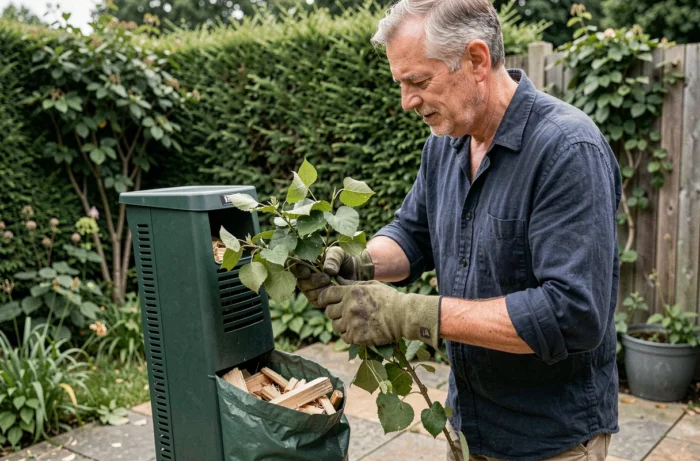
The choice of a shredder intended for producing mulch is not the same as for simply clearing green waste. The particle size of the shredded material, its decomposition speed in the soil, and its ability to form a stable mulch directly depend on the cutting system and the engine speed. We will detail the parameters that really matter to obtain usable mulch, not just a pile of chips.
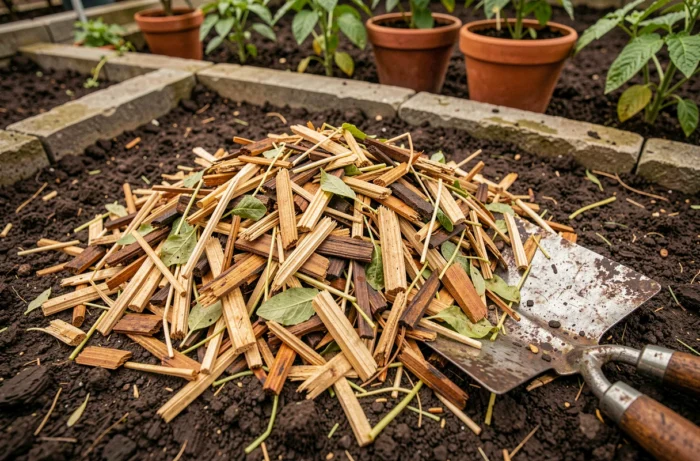
Particle size of the shredded material and quality of the resulting mulch
A disc blade shredder produces irregular, often fibrous chips that decompose quickly upon contact with the soil. This type of shredding is suitable for composting but makes for poor mulch: it compacts, allows weeds to pass through, and disappears within a few weeks in an exposed bed.
A rotor shredder (or cutting cylinder) crushes and shreds the material. The result is more homogeneous, with shorter pieces and a structure that interlocks better with the soil. For mulching flower beds or shrub bases, the rotor produces the most suitable shredded material for mulching.
Turbine shredders combine shearing and suction. We recommend them when the volume of pruning is significant and the diameter of the branches regularly exceeds what entry-level rotor models can handle. The resulting shredded material is dense, uniform, and holds well in a thick layer on the ground.
Before investing, it is essential to understand the different vegetation shredding techniques and their direct impact on the longevity of the mulch: a poor cutting system makes the shredded material unusable as mulch, regardless of the budget.
Cutting diameter and engine power: the real thresholds to know
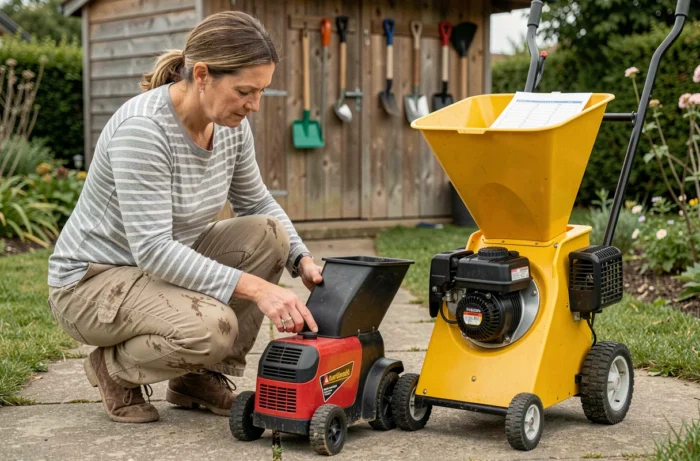
The maximum diameter allowed by the hopper is the most underestimated data. Entry-level electric shredders accept thin branches, suitable for privet or boxwood hedges. For pruning fruit trees or large woody shrubs, you need to increase power and cutting capacity.
Power alone does not guarantee good shredding. A powerful motor coupled with a disc blade system remains limited on hard, dry wood. The gear torque, on rotor models, determines the actual ability to crush without jamming. We observe that frequent jams degrade the quality of the shredded material and prematurely wear out the blades.
Gas or electric for regular mulching
Gas shredders offer high torque and complete autonomy, but they remain noisy and heavy. Their use is justified on large properties with long hedges and trees that need to be pruned several times a year.
For an average-sized garden, a corded electric rotor shredder covers most mulching needs. Battery models are improving, but their autonomy remains a limiting factor when shredding several cubic meters of branches in one session.
- Green and tender branches (hedges, woody perennials): a rotor electric shredder is sufficient, the shredded material will be soft and easy to spread.
- Semi-hard wood (fruit trees, lilacs, forsythia): prefer a rotor with high torque or a turbine model to avoid jams.
- Hard and dry wood (oak, hornbeam, old apple trees): a gas or high-end electric turbine shredder is necessary, or else the blades may break.
Ergonomics and throughput: what turns a chore into an efficient routine
Producing your mulch requires shredding regularly, not just once a year. The ergonomics of the shredder determine the actual frequency of use. A device that is difficult to move or takes a long time to set up ends up at the back of the garage.
The collection bin must be large enough to limit interruptions. Models without bins that eject onto the ground are suitable if the shredded material is spread directly at the base of the plants. For storage, a bin or collection bag prevents having to scoop it up with a shovel.
The weight and stability of the chassis are as important as the power. A lightweight shredder on narrow wheels easily tips over when pushing thick branches into the hopper. We recommend checking the wheelbase and wheel width before purchase, especially on sloped terrain.
Blade maintenance and longevity of the cutting system
A rotor is sharpened or replaced less often than a disc blade, which dulls quickly on hard wood. Dull blades produce stringy shredded material that does not make good mulch. Planning for a spare set of blades upon purchase is a reflex to adopt.
Reversible rotor models allow you to use both sides of the blade before replacement, effectively doubling the lifespan of the consumable.
Valuing shredded material as mulch: regulations and good practices
Since January 1, 2024, all individuals must sort their organic waste at the source, including green waste from the garden. Domestic shredding to produce mulch directly meets this legal obligation. It is a concrete alternative to disposal at recycling centers or municipal collection, which does not exist everywhere.
The burning of green waste remains prohibited for individuals. Non-compliance can result in a fine of up to 750 euros. Even garden incinerators are explicitly targeted by regulations: their sale and use for organic waste are banned.
- Spread fresh shredded material in a sufficient layer at the base of shrubs, hedges, and in flower beds to limit evaporation and slow down weeds.
- Mix shredded conifers with shredded broadleaf trees to balance the acidity of the mulch.
- Store surplus in an aerated pile: dry shredded material can be preserved for several months and can serve as winter mulch.
- Reserve very fine shredded material (from tender foliage) for the composter rather than for mulching, as it decomposes too quickly on the surface.
A well-chosen shredder turns every pruning session into a stock of immediately usable mulch. The determining criterion remains the cutting system, not the brand or the displayed price. A rotor or turbine suited to the actual diameter of your branches will produce stable, durable mulch that meets the requirements for organic waste valorization.