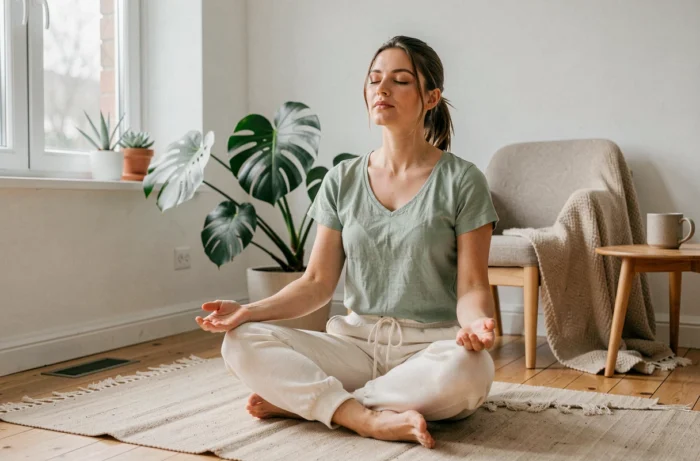
A difficult wake-up, tension in the neck by the end of the day, sleep that no longer restores anything: we all know these signals. Improving daily well-being does not necessarily require major upheavals. A few natural gestures, repeated regularly, are often enough to regain a more stable physical and mental balance.
Here are ten concrete tips, derived from simple and accessible practices, to address stress, sleep, the body, and social relationships without resorting to complicated solutions.
1. End your shower with a blast of cold water
We’re not talking about standing under an icy torrent for five minutes. Thirty seconds of cold water on the legs and upper back at the end of the shower is enough to restart blood circulation and trigger an immediate energy boost.
The effect on stress is notable: the thermal shock forces the body to refocus on the present moment, which abruptly cuts off morning mental rumination. Responses vary on this point, with some finding the exercise too unpleasant at first. It is recommended to start with the feet and gradually move up over several days so that the ritual becomes natural.
2. Practice abdominal breathing before a stressful situation
When you feel tension rising before a work meeting or a medical appointment, five cycles of slow abdominal breathing can measurably lower the heart rate. Inhale through the nose while expanding the belly, exhale through the mouth while pulling it in, with a longer tempo on the exhale than on the inhale.
This is not meditation. It is a physiological tool that acts directly on the parasympathetic nervous system. It can be practiced sitting at your desk, in your parked car, or standing in a queue. You will also find additional resources on the Bien et Bio website to deepen these breathing techniques in daily life.
3. Replace morning coffee with an infusion of adaptogenic herbs
Coffee stimulates, but it also amplifies anxiety in sensitive individuals. Switching to an infusion of herbs like tulsi (holy basil) or rhodiola in the morning changes the quality of awakening: less peak, less crash by late morning.
Note: a herbal dietary supplement is not a medication. In France, its market entry relies on a simple declaration to the DGCCRF, without demonstrating efficacy comparable to that required for a medical treatment. Pregnant women, children, and those on medication should consult a healthcare professional before consuming these products. The Anses has also listed precautions related to over a hundred medicinal plants used in dietary supplements.
4. Walk for twenty minutes after lunch
We know the 2 PM slump. Rather than fighting it with a second coffee, a short walk after the meal improves digestion and stabilizes blood sugar levels. The effect on mental clarity for the rest of the afternoon is tangible.
Walking outside, even in overcast weather, exposes you to natural light, which helps reset the circadian rhythm. We’re not talking about hiking: a walk around the block is sufficient. The goal is to break prolonged sedentary behavior, not to exercise.

5. Put down your phone an hour before bed
The blue light from screens delays melatonin production, but the problem goes beyond that. Scrolling through social media or reading anxiety-inducing news keeps the brain in a state of alertness. The sleep that follows is lighter and less restorative.
Specifically, put the phone in another room and replace it with a book, a notebook, or a conversation. This regular digital break improves sleep quality more effectively than most melatonin-based dietary supplements.
6. Keep a gratitude journal in the evening
Three sentences, no more. Each evening, write down three positive things that happened during the day, no matter how trivial: a pleasant meal, a chat with a colleague, a ray of sunshine. The mechanism is simple: forcing the brain to scan the day from a positive angle gradually changes the way we process information.
This is not magic, and the effect takes a few weeks to manifest. The tool works better when you are specific (“the coffee with Marie during the break”) than when you remain vague (“my family”).
7. Cook one meal a day with raw ingredients
We’re not asking you to become a chef. Preparing just one meal a day from vegetables, whole grains, and unprocessed proteins changes your relationship with food. The act of cooking itself has a calming effect, akin to a meditative manual activity.
The impact on the body is twofold:
- Reduction in added sugars and additives, which contribute to chronic inflammation and fatigue
- Better intake of fiber, vitamins, and minerals, directly linked to sleep quality and mood stability
- Feeling of control over one’s health, which boosts confidence and reduces food-related anxiety
8. Practice dry brushing before the shower
With a natural fiber brush, make circular movements on dry skin, moving up from the feet towards the heart. This gesture of a few minutes stimulates the lymphatic system and activates blood circulation.
Dry brushing also provides an immediate feeling of physical lightness. It can easily be integrated into the morning routine, just before the shower. The only point of caution: avoid irritated areas or very sensitive skin, and choose a brush with fibers that are not too harsh.
9. Maintain a social relationship every day
Sending a message to a friend, calling a loved one, chatting with a neighbor: maintaining a daily social connection protects mental health as much as physical exercise. Isolation is a recognized risk factor for anxiety and depression.
We’re not talking about multiplying outings. A sincere exchange of a few minutes is enough. The quality of the connection matters more than its duration. For those who work remotely, it’s a gesture to plan intentionally, as it no longer happens spontaneously.
10. Use essential oils wisely
Diffusing true lavender in the evening or applying a drop of peppermint oil to the temples in case of tension: these practices are widespread. Their effect on relaxation and mental clarity is real for many users.
The trap is to consider essential oils as harmless products. Their regulatory status in France depends on their presentation and claimed use. An essential oil cannot be presented as treating or curing a disease without falling under a pharmaceutical framework. European regulation No. 1924/2006 strictly governs health claims. Before any regular use, a consultation at the pharmacy remains the safest reflex.
None of these ten practices require a special budget or a radical lifestyle change. Their effectiveness relies on regularity, not intensity. Start with two or three of these gestures, maintain them for a month, then adjust: this is the most reliable method to see lasting change in stress, sleep, and daily energy.